Price is only one part of the story
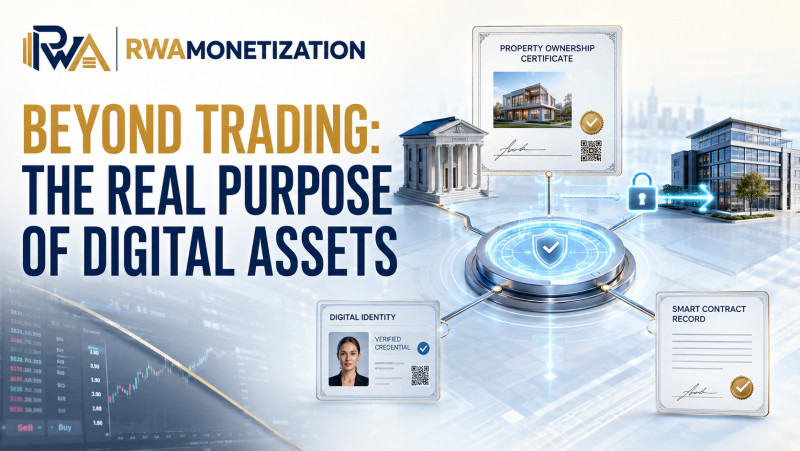
Public discussion often reduces digital assets to market prices. That framing overlooks a broader question: can digitally represented rights make financial and commercial processes work better?
A digital asset may function as a payment instrument, a security, a contractual claim, a credential, a title-related record, a collectible, or access to a service. Its economic and legal substance matters more than the label “token.”
Practical use cases
Issuance and ownership administration
Programmable ledgers may help issuers maintain records, enforce transfer restrictions, and process distributions or redemptions.
Settlement
If tokenized assets and suitable payment instruments operate on compatible infrastructure, transactions may be settled with fewer messaging and reconciliation steps.
Collateral mobility
Digitally represented assets may be pledged or moved more efficiently when legal rights, custody, and infrastructure are aligned. Faster movement can improve operations, but it can also transmit stress more quickly and therefore requires risk controls.
Credentials and permissions
Tokens can represent memberships, tickets, identity-related credentials, or other permissions. These uses do not necessarily involve an expectation of financial return.
Traceability
Shared records may help document provenance or transaction history. The reliability of that history still depends on correct initial data and trustworthy links to the real world.
Utility does not remove risk
A product can have a legitimate use and still expose users to cybersecurity, privacy, legal, operational, or counterparty risk. Smart-contract exploits, lost credentials, compromised administrators, inaccurate external data, and unclear redemption processes can undermine an otherwise useful design.
Responsible analysis therefore asks two questions: What function does the asset perform, and what safeguards make that function dependable?
A healthier digital-asset conversation
The future of digital assets should not be judged only by trading volume. More meaningful measures include settlement reliability, cost reduction, service availability, legal clarity, resilience, and whether users understand their rights.
That is the editorial space RWAMONETIZATION intends to cover: digital assets as infrastructure and enforceable claims, examined without turning every story into a price prediction.
Tags: Digital Assets, Beyond Trading, Tokenization, Digital Credentials, Settlement, Collateral, Blockchain Utility, Responsible Finance