Almost anything can be represented—but representation is not ownership
Technology can create a token linked to almost any asset, right, or data point. The difficult question is whether that token carries a valid, enforceable, and operationally reliable claim.
Successful tokenization requires more than a smart contract. The asset must be identifiable, the issuer must have authority, holder rights must be documented, and transfers must fit applicable law.
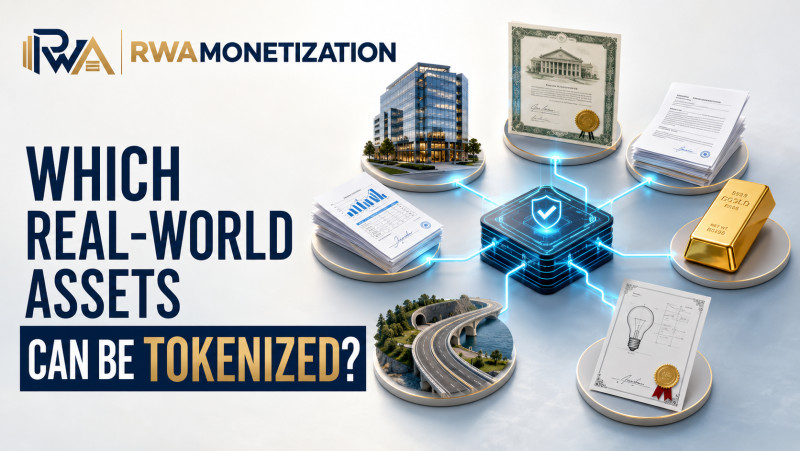
Common asset categories
Government and corporate debt
Bonds and similar instruments already have standardized payment obligations and established market infrastructure, making them prominent candidates for tokenized issuance and settlement. They remain subject to securities, custody, disclosure, and market rules.
Private credit and loans
Tokens may represent participation in loans, fund interests, or debt issued through a special-purpose vehicle. Important risks include borrower default, servicing quality, valuation, concentration, and limited liquidity.
Real estate
A token might represent company shares, fund units, debt, revenue rights, or another interest connected to a property. Direct land title is a different legal concept and typically depends on an official registry. Investors should never assume that holding a token means their name appears on the property title.
Commodities
Gold, agricultural products, or other commodities may be represented digitally when a custodian or warehouse holds the underlying goods. The arrangement depends on inventory verification, storage, insurance, quality standards, and redemption rules.
Invoices and receivables
Businesses may finance expected payments by assigning or selling receivable interests. Tokenization can assist administration, but it does not eliminate disputes, duplicate financing, fraud, or debtor nonpayment.
Funds and private-company interests
Tokens can represent units, shares, or contractual interests, subject to offering and transfer restrictions. Investor eligibility, disclosures, governance, and valuation are especially important.
Art, collectibles, and intellectual property
Token holders may receive fractional economic interests, licensing revenue rights, or contractual participation. Authenticity, appraisal, custody, copyright, and enforcement can be complex. Owning a token linked to art does not automatically transfer copyright.
Infrastructure and environmental assets
Projects may involve claims related to energy, transportation, or environmental units. These structures rely heavily on verification standards, project performance, and regulatory recognition.
A five-part test
Before describing an asset as meaningfully tokenized, examine whether there is:
- a clearly identified underlying asset or right;
- a legally authorized issuer;
- an enforceable connection between token and asset;
- reliable custody, servicing, and data;
- a defined transfer, redemption, and failure process.
The bottom line
Many things can be represented by tokens. Far fewer can be packaged into trustworthy products. The quality of tokenization is determined by the entire legal and operational chain, not by the ease of creating a digital unit.
Tags: Tokenized Assets, Real Estate, Private Credit, Bonds, Commodities, Receivables, Intellectual Property, RWA
Thumbnail direction: A refined grid of real estate, bonds, gold, invoices, infrastructure, and intellectual property converging into one secure token framework.
Sources: