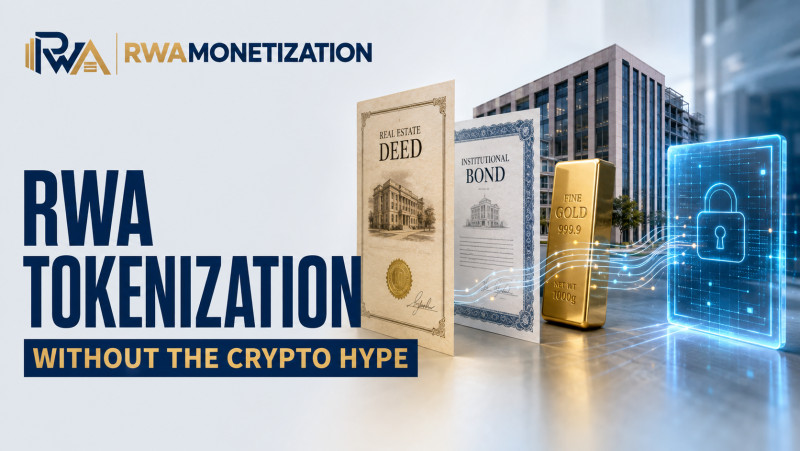
Tokenization is a recordkeeping and transaction design
Tokenization is commonly described as representing an asset or claim on a programmable digital ledger. In practical terms, it can involve issuing a digital unit, recording ownership or entitlements, and defining how that unit may be transferred or used.
The process goes beyond scanning a paper certificate or placing a database entry online. A tokenized arrangement may allow programmed rules to participate in the transaction—for example, checking whether a recipient is eligible, coordinating payment and delivery, or distributing income according to predefined terms.
A simplified tokenization process
1. Identify the underlying asset
The issuer must define the property, loan, security, fund interest, invoice, commodity, or other right being represented.
2. Establish the legal structure
Documents determine who owns the asset and what token holders actually receive. A special-purpose company, trust, fund, custodian, or contractual arrangement may sit between the token and the asset.
3. Verify and safeguard the asset
The asset may require valuation, title checks, custody, insurance, audits, or continuing data verification. For offchain assets, a blockchain cannot independently observe whether a building exists, a borrower paid, or a warehouse still holds a commodity.
4. Issue and record the tokens
The platform creates digital units and records approved holders and transfers. Depending on the design, the blockchain may be the authoritative record or may need to be reconciled with an offchain register.
5. Administer the asset over time
Someone must collect payments, manage corporate actions, maintain compliance, resolve disputes, and process redemption or transfer requests.
What tokenization may improve
According to the BIS and IMF, tokenization may reduce fragmentation by combining messaging, reconciliation, and asset transfer on shared programmable infrastructure. It may also support atomic settlement, in which linked obligations are completed together, reducing the risk that one side delivers while the other does not.
Other possible improvements include smaller investment units, expanded operating hours, automated servicing, and more transparent transaction histories. These outcomes are possibilities—not automatic features of every tokenized product.
What tokenization does not fix
Tokenization does not guarantee:
- that an underlying asset is genuine or properly valued;
- that a claim is legally enforceable;
- that buyers will be available when a holder wants to exit;
- that a smart contract is secure;
- that a custodian or issuer cannot fail;
- or that a product complies with securities, property, tax, and financial-crime rules.
It can make a weak structure move faster. That is not the same as making it safe.
The right way to evaluate tokenization
Ignore the promise of “putting everything onchain” and examine the full system. A credible arrangement needs a sound asset, clear legal rights, reliable custody, competent servicing, accurate data, secure technology, and appropriate regulatory treatment.
Tokenization is most meaningful when it removes a specific operational problem. If a project cannot explain which process it improves and how token-holder rights work, its blockchain language may be decoration rather than infrastructure.
Tags: RWA Tokenization, Tokenized Assets, Blockchain Education, Smart Contracts, Digital Finance, Financial Technology, Responsible Innovation